Introduction
Sustainability has moved from being a desirable business value to becoming a core requirement for modern organizations. Customers, retailers, regulators, and investors increasingly expect companies to make decisions that reduce waste, conserve resources, and support responsible growth. In this changing environment, responsible printing and sustainable packaging are no longer optional add-ons. They are practical business choices that influence brand perception, operational efficiency, customer trust, and long-term competitiveness.
For businesses that rely on printed communication, product packaging, shipping materials, labels, cartons, brochures, and corporate stationery, every material decision has an environmental and commercial impact. The goal is not simply to use less packaging, but to use smarter packaging. This final blog takes a strategic view of how businesses can make better choices through responsible sourcing, recyclable design, packaging optimization, the use of recycled paper where appropriate, waste reduction, and practical implementation. With the right approach, companies can build a more sustainable future while still protecting products, presenting brands professionally, and meeting customer expectations.
A responsible printing and packaging strategy begins with understanding the complete lifecycle of a product’s printed materials. This includes how raw materials are sourced, how efficiently they are used, whether the packaging can be reused or recycled, how it performs during transportation, and how easily customers can dispose of it responsibly. When each stage is considered together, sustainable packaging becomes a practical framework for reducing environmental impact without compromising business performance.
Choosing Recyclable Packaging
One of the most effective ways businesses can improve sustainability is by selecting packaging materials designed for recycling and responsible disposal. Recyclable packaging helps reduce the amount of material sent to landfills and supports the circular economy, where resources are recovered and reused instead of being wasted. For many product categories, paper-based packaging offers a strong balance of practicality, printability, recyclability, and customer appeal.
Paper-based packaging solutions such as recyclable cartons, paper bags, sleeves, folders, mailers, labels, and packaging inserts can help organizations reduce waste while maintaining strong product presentation. These materials are especially useful for retail, food, cosmetics, pharmaceuticals, education, corporate gifting, and e-commerce businesses that need packaging that is attractive, durable, and easier for customers to dispose of responsibly.
Choosing recyclable materials also communicates a clear message about a company’s values. When customers receive products in thoughtful, well-designed, and recyclable packaging, they often associate the brand with responsibility and care. This can strengthen customer loyalty and create a positive brand experience beyond the product itself.
Optimizing Packaging Design
Efficient packaging design contributes significantly to sustainability because it determines how much material is used, how well the product is protected, how easily the package can be stored or transported, and how simple it is to recycle. A package that is too large wastes paper, board, ink, storage space, and transportation capacity. A package that is too weak may lead to product damage, returns, and additional waste. The right design balances protection, presentation, cost, and environmental responsibility.
Businesses can improve resource utilization and reduce avoidable waste by focusing on several design priorities:
- Reducing unnecessary packaging layers and decorative elements
- Optimizing carton sizes to match product dimensions
- Minimizing material consumption without weakening protection
- Improving transportation efficiency through compact, stackable structures
- Simplifying recycling by avoiding difficult-to-separate mixed materials
Well-designed packaging helps reduce environmental impact while maintaining product protection and presentation. It can also lower shipping costs, improve warehouse efficiency, reduce product returns, and make packaging easier for customers to handle. For this reason, packaging optimization should be treated as both a sustainability strategy and a business efficiency strategy.
Using Recycled Paper Where Appropriate
Recycled paper can be incorporated into numerous business applications without compromising professional quality. For many organizations, it offers a practical way to reduce reliance on virgin materials while continuing to produce attractive, functional, and brand-consistent printed materials. The key is to select the right grade, thickness, finish, and print process for the intended use.
Examples of suitable applications include:
- Product packaging for retail and promotional items
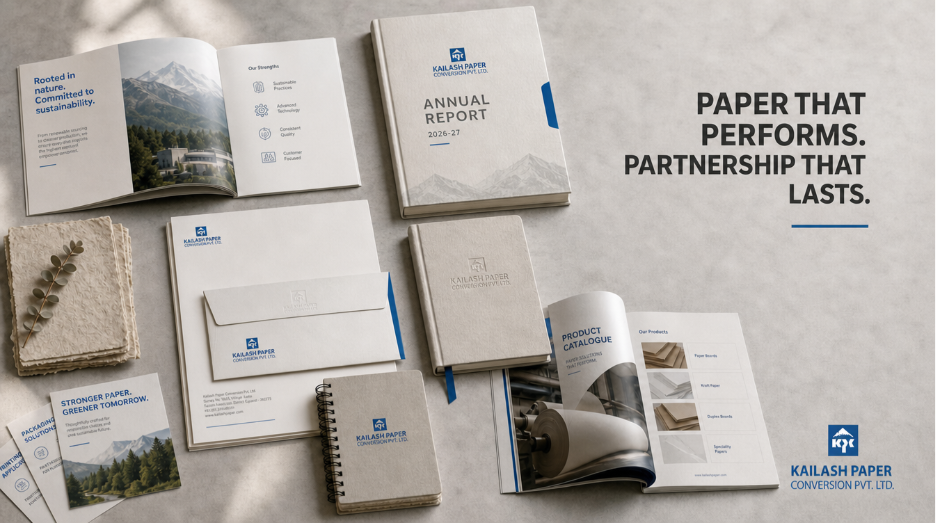
- Corporate stationery such as letterheads, envelopes, and folders
- Brochures for marketing, education, and sales support
- Catalogues that present products in a professional format
- Marketing materials including flyers, leaflets, and inserts
- Packaging inserts for instructions, care information, and brand messaging
These solutions help businesses align their branding and communication efforts with sustainability objectives. Recycled paper can also add a natural, authentic, and responsible look to printed materials, which may be especially valuable for brands that want to highlight ethical sourcing, environmental awareness, or community responsibility. When combined with high-quality printing, recycled paper can support both visual appeal and environmental goals.
Designing for Reuse and Recycling
Packaging that is easy to reuse or recycle provides additional value for both businesses and customers. A reusable box, sturdy paper bag, or informative packaging insert can extend the usefulness of the material beyond the first purchase. Similarly, packaging that is clearly recyclable helps customers make better disposal decisions and reduces confusion at the end of the product lifecycle.
Thoughtful packaging design encourages responsible disposal practices while supporting long-term environmental goals. Businesses can improve recyclability by using compatible materials, limiting unnecessary coatings, keeping instructions simple, and designing packaging that can be flattened, separated, or reused with minimal effort. Clear printed messaging can also guide customers by indicating whether a carton, label, insert, or paper bag should be recycled or reused.
Organizations that prioritize recyclability often strengthen their sustainability programs and improve stakeholder confidence. This approach also helps teams make better decisions internally because everyone understands that packaging is not just a protective layer; it is part of the company’s environmental responsibility, customer communication, and brand identity.
Practical Sustainable Solutions for Businesses
Businesses can strengthen sustainability initiatives through a wide range of paper-based products and packaging solutions. The most effective approach is to review daily business requirements and identify where better materials, improved design, or more efficient printing can reduce waste. This may include changing packaging formats, redesigning marketing collateral, switching to recyclable boards, or selecting print quantities more carefully to prevent unused stock.
Examples include:
- Recyclable cartons for product protection and presentation
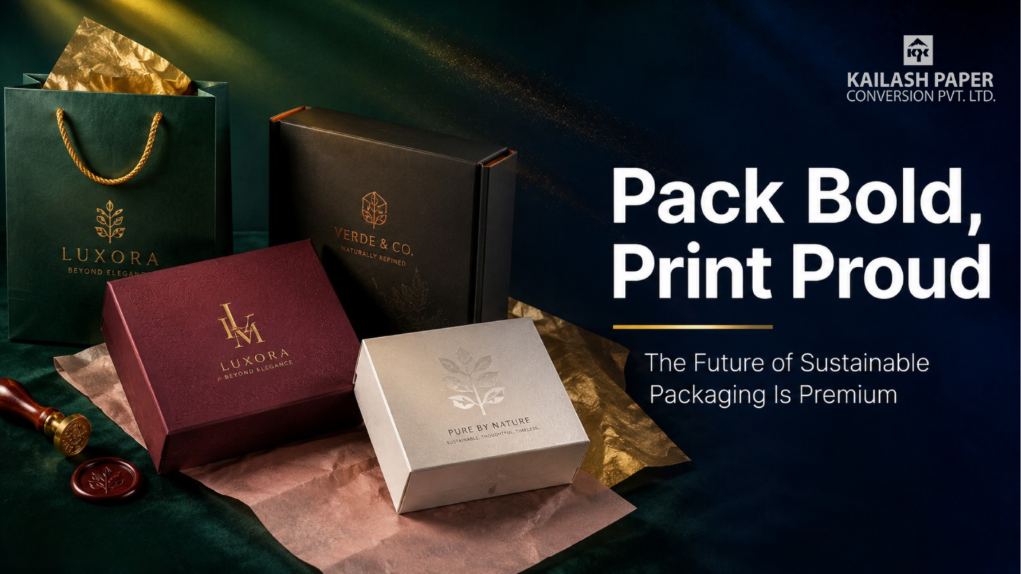
- Paper bags for retail, gifting, and events
- Brochures for sales, marketing, and corporate communication
- Corporate stationery for everyday professional use
- Packaging inserts for product information and customer engagement
- Labels that support brand recognition and product clarity
- Sustainable printed materials for campaigns, launches, and internal communication
These solutions support environmental objectives while maintaining strong brand presentation and professional communication. Sustainable choices do not have to reduce quality; in many cases, they improve the overall customer experience by making packaging cleaner, clearer, easier to handle, and more aligned with modern expectations.
Kailash Paper helps businesses implement practical sustainability strategies through customized printing and packaging solutions tailored to their unique requirements. By understanding product type, usage, target audience, quantity, finish, and budget, the right paper-based solution can be developed for each business need. This makes sustainability more achievable because it becomes part of normal planning instead of a separate or complicated process.
Supporting Responsible Business Practices
Sustainable printing and packaging demonstrate a commitment to responsible business operations. They show that a company is thinking beyond short-term presentation and considering the wider impact of its materials, processes, and customer interactions. This is especially important in markets where buyers are becoming more aware of waste, over-packaging, and environmental performance.
Benefits include:
- Improved brand reputation through responsible visible choices
- Stronger customer trust because values are reflected in materials
- Enhanced stakeholder confidence among partners, employees, and clients
- Better environmental performance through lower waste and smarter material use
- Long-term business resilience as markets shift toward responsible sourcing
Businesses that embrace sustainability are increasingly better positioned to meet evolving market expectations. Responsible choices can also support internal culture by encouraging teams to think carefully about procurement, design, printing, storage, and distribution. Over time, these improvements create a stronger foundation for responsible growth.
Conclusion
Building a sustainable future requires more than choosing one eco-friendly material. It depends on responsible decisions across sourcing, packaging design, material efficiency, recyclability, waste reduction, print quality, and practical implementation. When businesses evaluate packaging and printed materials through this complete lifecycle approach, they can reduce environmental impact while maintaining product protection, professional presentation, and customer trust.
Responsible printing and sustainable packaging choices also support stronger brand reputation, better stakeholder confidence, and long-term business resilience. By combining recyclable paper-based packaging, optimized structures, recycled paper where appropriate, and high-quality printing, organizations can make sustainability a practical part of everyday business operations. The future of packaging is not only about looking good on the shelf; it is about performing responsibly from production to disposal.
Call to Action
Ready to make responsible printing and packaging choices for your business? Kailash Paper helps brands develop sustainable paper-based solutions, including recyclable cartons, paper bags, labels, brochures, corporate stationery, packaging inserts, recycled paper options, and customized printed materials designed to balance sustainability, performance, and brand presentation. Partner with Kailash Paper to create packaging and printed communication that supports your business goals while contributing to a more responsible and sustainable future.