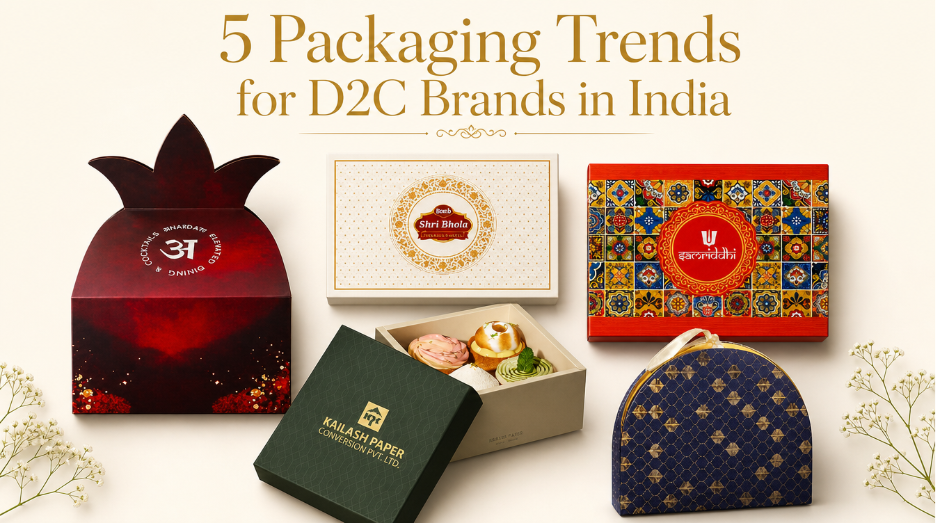
For D2C brands in India, packaging is no longer a side task or a quick afterthought. It has become the first real encounter a customer has with your brand. The box, pouch, or bottle sits between your promise and their experience. It has to protect the product, tell the story, and feel good in the hand, all at once.
In recent years, a handful of clear packaging trends have emerged across Indian D2C brands, especially in food, beauty, groceries, and lifestyle. From minimalist designs that look great on Instagram to personalized packs and sustainable formats, the way brands print and build their packaging directly influences how customers perceive them.
In this guide, we will walk through five major packaging trends shaping D2C in India today and show how digital presses, the right printing company, and strong printing and packaging solutions provider can help you adopt them without cutting corners on quality, cost, or scalability.
Trend 1: Minimalist, Instagram‑Friendly Packaging
One of the most visible packaging trends for D2C brands in India is the move toward minimalism. Instead of filling the pack with bold discounts, multiple offers, and competing colours, many brands are choosing clean layouts, simple typography, and carefully chosen colours that feel premium and intentional.
A minimalist design stands out because it is easy to read, easy to photograph, and easy to remember. In a marketplace full of loud, discount‑driven visuals, a calm, well‑designed pack feels like a breath of fresh air. It also performs well on social media, where cluttered design can get lost in the scroll.
For this trend to work, packaging printing plays a critical role. The brand’s chosen colours must be consistent across batches, and small details like line thickness, spacing, and crop must be precise. The right paper, board, and finish also matter. A matte surface can feel sophisticated and muted, while a glossy finish can make the typography pop without adding visual clutter.
A good printing company can guide D2C brands on how to translate a minimalist visual concept into a physical pack that performs on shelf, on camera, and in the hand. They can advise on which paper to use, how to adjust colour profiles, and when to keep finishes simple so that the brand’s minimalist aesthetic does not get diluted by unclear colours or uneven textures.
Trend 2: Sustainable, Paper‑Forward Packaging
Sustainability is no longer a niche concern for Indian D2C brands. Many customers actively look at the material and structure of a pack before deciding to buy. They ask questions like, “Is this plastic heavy?” or “Can I recycle this easily?”
Brands are responding by moving away from purely plastic‑heavy formats and exploring paper‑rich alternatives. Cartons, mailers, paperboards, and recyclable pouch liners are becoming more common, especially for food, snacks, and lifestyle products.
Sustainable paper‑forward packaging is not just about using “green” paper. It is about choosing the right board thickness, designing for fewer layers, and selecting inks and coatings that still allow the pack to be easily recycled or composted wherever possible. For example, a brand can replace full‑coverage plastic lamination with a light matte or soft‑touch coating that feels premium yet keeps the pack more eco‑friendly.
A printing and packaging solutions partner is essential in this shift. They help brands choose the right balance between sustainability and shelf life, between eco‑friendly materials and structural strength, and between design ambition and practical production. For many D2C brands, this makes the pack not just a container, but a quiet statement of values.
Trend 3: Limited Editions and Personalised Packaging
Personalisation and limited‑run packaging are fast becoming a favourite strategy for D2C brands. Whether it is a festive edition, a city‑specific design, or a customer‑name‑on‑pack offer, brands are using packaging as a way to create exclusivity and emotional connection.
This is where digital printing shines. Unlike traditional offset printing, which requires plates and works best for large runs, digital printing is perfect for small quantities, fast turnaround, and frequent design changes. It is ideal for brands that want to experiment or test the market before committing to a high‑volume production.
A printing company that understands digital printing can help D2C brands stay nimble, experiment with ideas, and avoid wasting stock on designs that do not resonate. For many founders, this makes packaging printing feel less like a one‑time cost and more like a flexible marketing tool that can be adapted to campaigns, audiences, and seasons.
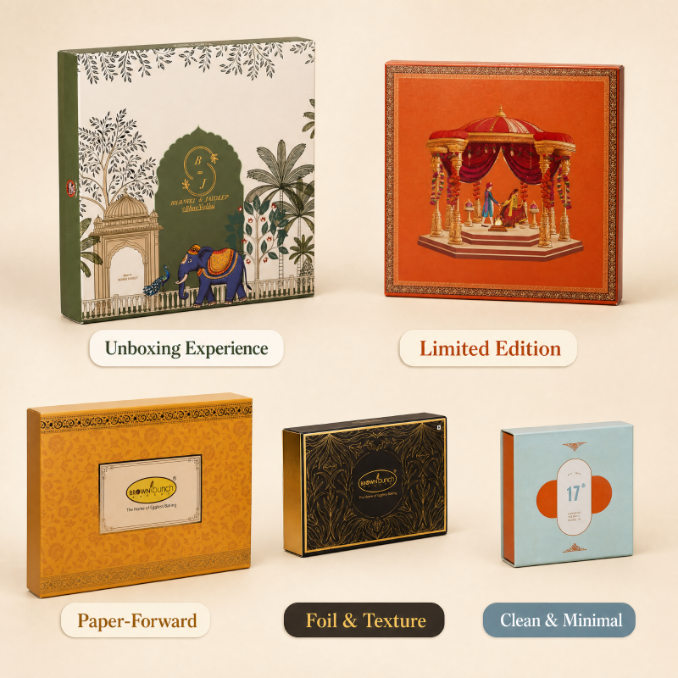
Trend 4: Unboxing as a Feature of the Brand
The unboxing moment is not an afterthought anymore. It is a key part of the brand experience. Many customers film, photograph, or share their unboxing on social media, which means the pack needs to feel good as an object, not just as a container.
Brands are now thinking about:
Easy‑to‑open flaps and clean inner layers that do not tear or fray.
Inner inserts, tissues, thank you cards, or small stickers that add a sense of delight.
Structural details that make the box feel sturdy yet elegant, such as tight fold lines.
All of these elements are supported by packaging printing. The print must be aligned with the structure, the colours must match the brand code, and the finishes must feel intentional. A good printing and packaging solutions provider can help design the box in 3D, not just in 2D, so that every fold, every pattern, and every detail feels planned and polished. They can also create physical samples and prototypes before final production, allowing brands to see, touch, test, and refine the packaging in real-world conditions.
For D2C brands, this turns the unboxing into a brand moment rather than a purely functional act. The pack becomes a small stage where the brand can express care, quality, and attention to detail, all before the product is even used.
Trend 5: Experimental Finishes and Structural Details
Beyond minimalism and sustainability, many D2C brands are exploring bolder finishes and structural details to stand out. This includes:
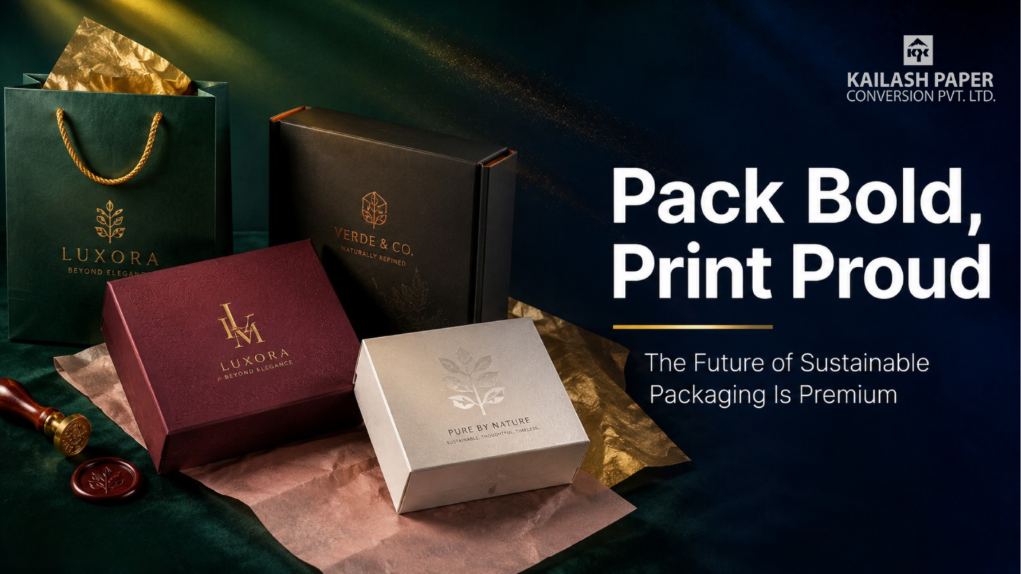
Embossing or debossing for logos and typography, giving the pack a tactile feel when you run your fingers over it.
Foil printing, spot UV, or soft‑touch coatings to add texture and depth without increasing clutter.
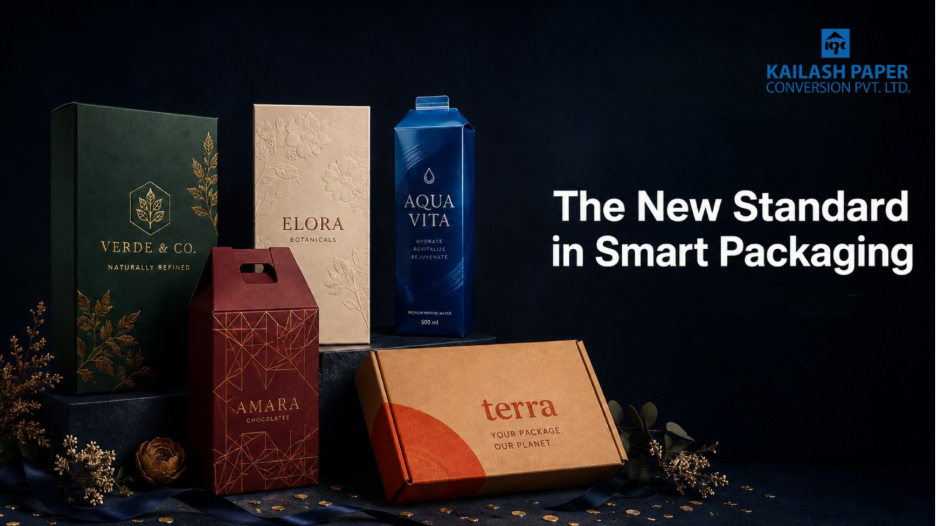
Unique box shapes, sleeves, inserts, or closures that feel different from standard cartons.
These details do not just look interesting; they change how the pack feels in the hand. A slightly textured surface, a subtle metallic logo, or a clean magnetic closure can make the product feel more premium, even if the price point remains accessible.
How Kailash Paper Delivers Premium Finishes for Indian D2C Brands
For premium finishes to work, a capable printing company is essential. The team must understand how different coatings behave on paper, how embossing tools are created, and how to control colour and registration across batches. They must also advise on durability, especially for Indian logistics, to ensure that the finish does not rub off in transit or storage.
A strong packaging printing partner can turn a bold design idea into a consistent, repeatable production reality. They help brands test different finishes, see how they feel on sample runs, and then scale them across larger orders without losing the premium feel.
How to Turn These Trends into Reality with Kailash Paper
For founders, the biggest challenge is not coming up with a beautiful design. It is turning that design into a pack that can be produced at scale, within budget, and with the right quality. Many brands fall in love with a concept but then feel disappointed when the printed box does not match the mockup.
Choosing the right printing company can make that transition smoother. A good partner will:
- Understand the brand’s category and customer behaviour, whether it is food, beauty, home, or gifting.
- Guide on the right material, structure, and print finish for the chosen trend, balancing cost, durability, and aesthetics.
- Offer low minimum order quantities and flexible batch production, making high-quality custom packaging accessible for brands at every stage of growth..
- small runs, and personalised or limited‑edition packs so brands can validate ideas before committing to large MOQs.
- Provide clear samples and proof guidance so brands can see how the pack will look and feel in real life before mass production.
- Communicate honestly about timelines, possible production bottlenecks, and alternate options if a chosen material or finish is not feasible.
A printing and packaging solutions provider like Kailash Paper also helps brands think ahead. They support not just the first launch, but the second and third run, making sure that the pack continues to feel consistent and on‑brand as the business scales.