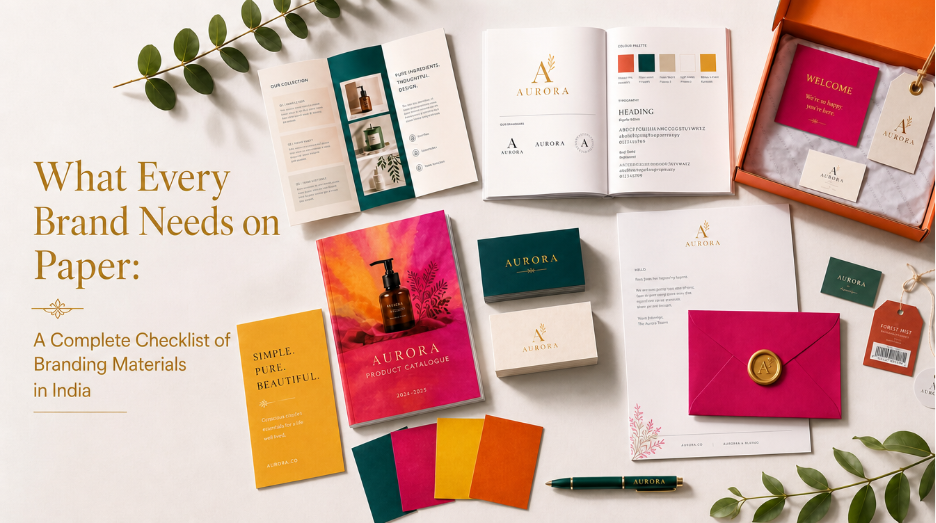
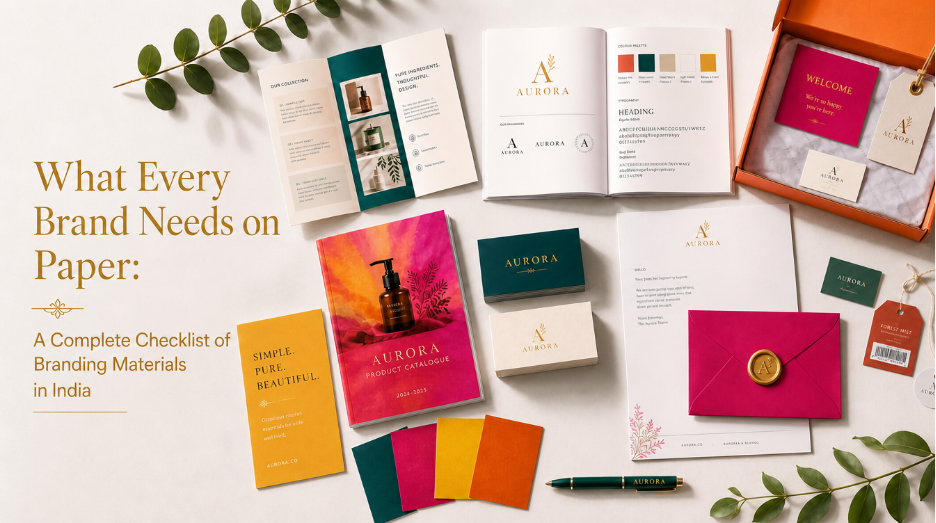
For brands today, the word “digital” tends to dominate every conversation. Yet, even in a world ruled by apps, emails, and social feeds, customers still encounter brands on paper. Business cards, packaging, invoices, thank‑you notes, brochures, and event flyers all carry the brand into the physical world.
Paper is where the brand becomes tangible. It can be touched, kept, gifted, or photographed. A well‑designed print piece can stay on a desk for months, quietly reinforcing the brand’s presence. For businesses that want to feel professional, consistent, and memorable, an organised set of branding materials is essential.
In this guide, we will walk through a complete checklist of branding materials every brand needs on paper. From core identity pieces to customer‑experience touches and campaign‑specific collaterals, this list will help you build a cohesive print ecosystem that supports your digital presence.
Core Brand Identity on Paper
Before a brand can think about campaigns or promotions, it must secure its core identity in print. These are the basics that travel everywhere the brand goes, on someone’s desk, in a meeting room, or slipped into a product box.
- Logo and print guidelines
Even if the brand is mostly seen online, it should maintain print‑ready versions of the logo. This includes high‑resolution files, colour variants (full colour, black, white), and clear guidelines for spacing, minimum size, and background use. These print‑ready assets ensure that every printed branding material like cards, brochures, or packaging that looks consistent and professional.
- Business cards
Business cards remain one of the most basic yet powerful branding materials. A well‑designed card communicates roles, contact details, and visual identity in seconds. Brands can choose between standard formats and eco‑friendly options such as recycled paper, soft‑touch finishes, or minimalist designs that feel premium.
- Letterheads and envelopes
Printed letterheads and branded envelopes give paper communication a formal yet unified feel. Whether sending proposals, invoices, or partnership letters, using a matching set of letterheads and envelopes reinforces that the brand pays attention to detail.
- Pre‑printed headers and stationery
For agencies, consultants, and service‑based brands, pre‑printed headers for reports, quotes, and proposals help convert abstract ideas into trusted deliverables. Even if documents are shared digitally, having a print‑ready version signals professionalism and can be used in client meetings or government filings.
Sales and Marketing Collateral
Printed sales and marketing materials allow brands to stand out in real‑world situations where digital screens are not always present. Trade shows, retail stores, cafés, and partner workspaces are all places where paper can steal attention.
- Brochures and product catalogues
Brochures and catalogues are among the most versatile branding materials. They can be used in B2B meetings, retail counters, or at exhibitions to showcase the product range, features, and brand story. Investing in good paper quality, layout, and colour accuracy turns a brochure into a credible reference, not just a throwaway flyer.
- One‑pager flyers and leave‑behind sheets
Sometimes, a short printed sheet is more effective than a long presentation. A one‑pager flyer summarising the brand’s value proposition, key products, and contact details can be left with prospects, partners, or event organisers. Clear headings, readable fonts, and a strong visual hierarchy make these materials easy to scan and remember.
- Lookbooks and style guides
For brands in fashion, beauty, or lifestyle, printed lookbooks are powerful tools. They help photographers, retailers, and media partners understand how the brand “lives” in the real world. Similarly, printed style guides can be shared with vendors and designers to keep the brand’s visual language consistent across all output.
- Posters and banners
Posters and banners are ideal for in‑store promotions, pop‑up events, or co‑working spaces. Using the same fonts, colours, and logo styling as the core identity ensures that even a simple poster feels like a natural extension of the brand.
Packaging and On‑Product Branding
For product‑based brands, packaging is one of the most visible expressions of branding on paper. It is the first thing a customer touches, the first thing they photograph, and often the last thing they remember.
- Product boxes, cartons, and labels
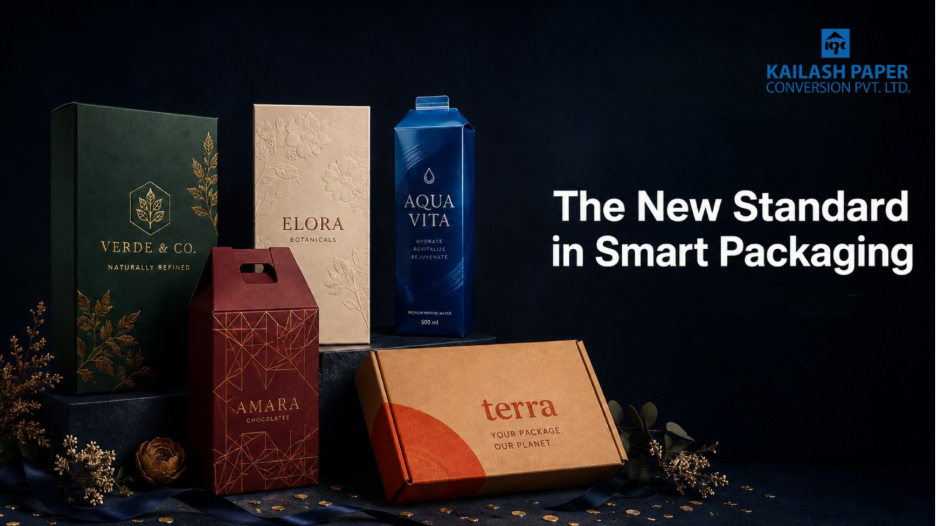
Every product box, carton, or label should carry the brand’s name, logo, and a clear visual language. Typography, colour, and layout should be consistent with the digital identity so that the customer feels the same brand across both online and offline touchpoints.
- Inner inserts and care‑guides
Inside the box, printed inserts can elevate the experience. Care‑guides, instruction sheets, or welcome notes in the brand’s tone help customers feel supported and informed. These materials can be printed on thinner paper or card inserts, depending on the product category.
- Tags and hangtags
Apparel, accessories, and gifting brands often rely on tags and hangtags to communicate size, material, and story. Printed with the same fonts and logo style as the main brand, these small pieces become part of the larger branding materials ecosystem.
- Unboxing and premium finishes
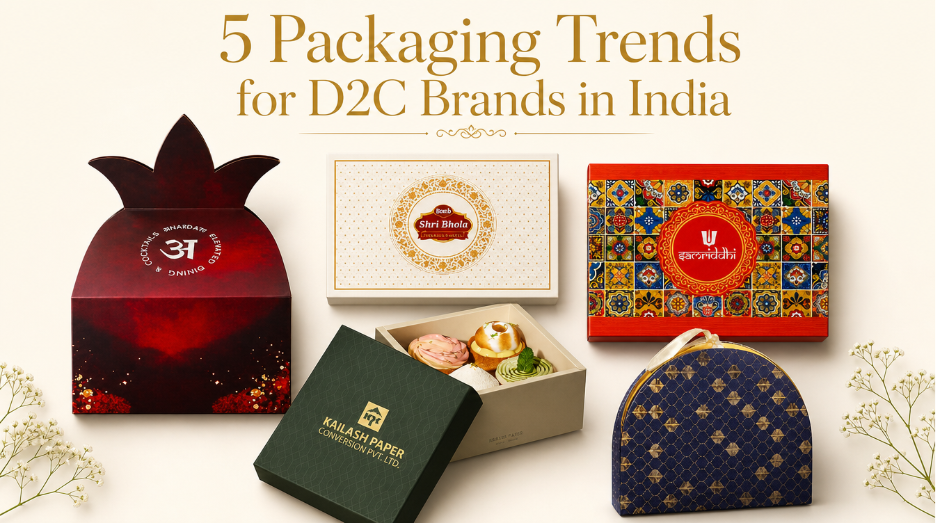
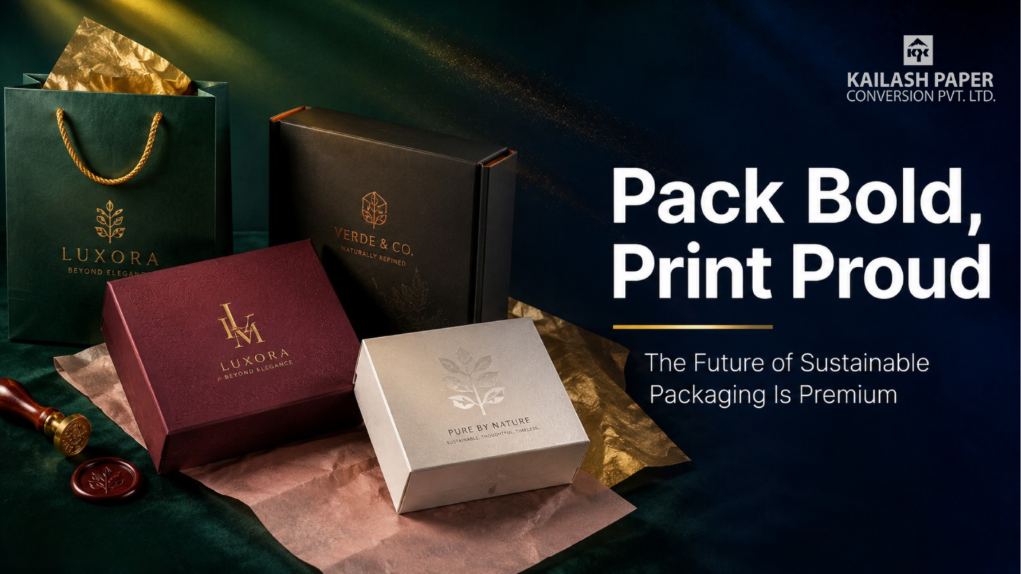
For many brands, packaging is not just a container; it is a stage. Soft‑touch finishes, spot UV, embossed logos, and textured paper can make a simple box feel premium. Even if the product is bought online, the printed packaging becomes a key part of the customer’s memory.
Customer Experience and Communication Materials
Beyond sales and packaging, printed materials shape how customers feel about the brand. These touchpoints are often small but can have a big emotional impact.
- Invoices and receipts
Invoices and receipts are usually seen as purely functional, but they can be designed to feel on‑brand. A simple header, logo, and consistent colour palette can transform a generic document into a professional, cohesive piece of branding on paper.
- Thank‑you notes and postcards
Including a printed thank‑you note or postcard in every order is a small gesture that builds strong emotional connections. A handwritten line or a short message in the brand’s voice makes the customer feel seen and valued.
- Warranty slips and service cards
For brands that offer service or repair, printed warranty slips and service cards are important. These should be easy to read, clearly itemised, and printed on durable paper that can be kept for years.
- Loyalty and referral cards
Loyalty cards, referral cards, or event invitations printed with the brand’s visual language can turn simple transactions into ongoing relationships. A customer may keep a beautifully designed card in their wallet long after the first purchase, silently reinforcing the brand in their daily life.
Internal and Operational Branding on Paper
Branding materials are not only for external customers. Employees, partners, and vendors should also experience the brand on paper. Internal print pieces help unify culture and communication.
- Branded stationery
Notepads, file folders, sticker labels, and even internal sticky notes with the brand’s logo create a subtle but consistent presence around the office. These materials may never be shared publicly, but they influence how employees feel about the brand.
- Training and SOP documents
Printed training manuals, SOP documents, and internal guides with the brand’s fonts and colours help employees absorb the brand’s language and values. When reports and presentations are printed for internal workshops, using branded templates keeps the look professional and unified.
- Meeting agendas and handouts
Even in a digital meeting, printed agendas, handouts, or discussion notes can make the experience more focused. Branded headers, simple layouts, and clear typography help participants read quickly and stay engaged.
- Name badges and internal signage
For larger teams or events, printed name badges and simple internal signage can be considered part of the branding materials. They may be small, but they reinforce the brand’s visual identity in everyday operations.
Promotional and Campaign‑Specific Print Collateral
Sometimes, brands need to move beyond evergreen materials and create print pieces tied to specific campaigns, festivals, or launches. These are often short‑lived but can leave a lasting impression.
- Limited‑edition inserts and postcards
Seasonal or festive campaigns can include limited‑edition inserts or postcards. These can be tucked into orders, handed out at events, or shared with partners. A small, well‑designed card can feel like a collectible and be kept long after the campaign ends.
- Branded stickers and cut‑outs
Stickers, cut‑outs, and small printables are versatile branding materials. They can be used in retail, at pop‑ups, or even as social‑media props. Customers often stick them on laptops, notebooks, or water bottles, turning them into mini billboards.
- Event materials and welcome kits
For workshops, launches, or brand experiences, printed tickets, welcome kits, and guides help structure the experience. Branded booklets, QR‑based guides, or simple printed schedules can make the event feel organised and intentional.
The only printing and packaging partner for all your needs- Kailash Papers
Kailash Papers, as a reputed printing and packaging partner, can be the backbone for brands looking to bring all their branding materials to life on paper. From core identity pieces like business cards, letterheads, and stationery to more complex collaterals such as brochures, catalogues, packaging, and campaign‑specific print materials, Kailash Papers offers end‑to‑end solutions that blend design, quality, and consistency.
With experience in handling diverse formats, finishes, and paper types, Kailash Papers helps brands translate their visual identity from digital screens into tangible, on‑paper formats without losing their essence. Whether it is premium matte finishes for luxury packaging, durable cardstock for business cards, or eco‑friendly materials for sustainable branding, the company aligns its technical capabilities with the brand’s positioning and values.